


PRODUCT DESCRIPTION
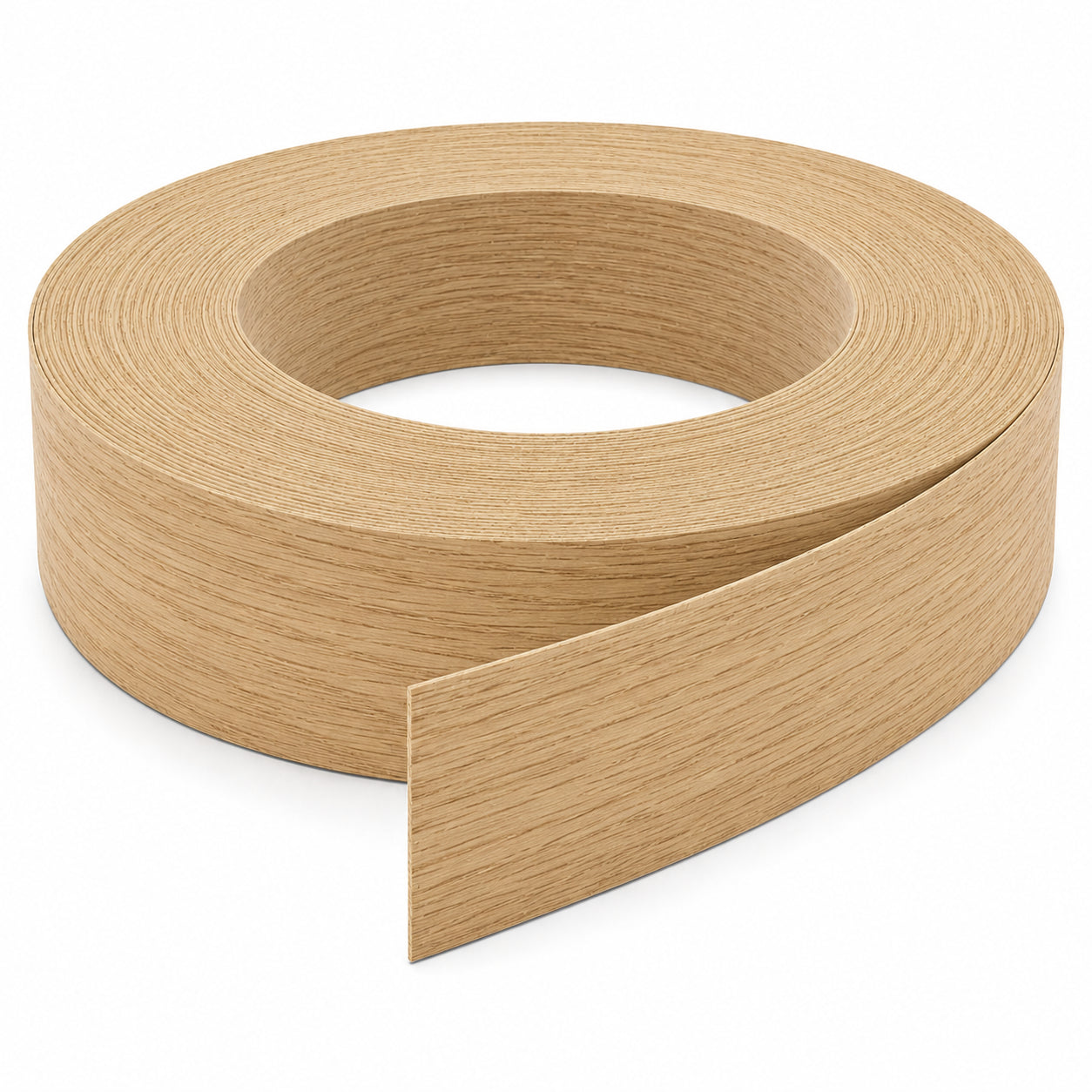
Oak Flexible Wood Veneer FS Unglued 22mm × 100m is a genuine real-wood edging roll designed to provide exposed furniture-board edges with the warm colour, natural texture and distinctive grain of Oak.
The veneer is fleeced and sanded but supplied without a factory-applied adhesive. This gives furniture manufacturers, cabinet makers and professional workshops complete control over the adhesive and bonding process used for their particular substrate, equipment and production requirements.
At 22mm wide, the edging is particularly suitable for common 18mm furniture panels because it leaves a small trimming allowance on both faces. The 100m roll supports repeated workshop and production use.
What Does FS Mean?
FS means Fleeced and Sanded. A supporting fleece improves the veneer’s flexibility and stability, while the natural Oak face is sanded to provide a smooth surface for finishing.
Unlike FSHM veneer, this FS product does not include a hot-melt adhesive layer. A compatible adhesive must be selected and applied separately.
Key Features
- Genuine natural Oak veneer surface
- Fleeced backing for improved flexibility and stability
- Pre-sanded real-wood face
- Supplied completely unglued
- Allows control over adhesive selection and application
- 22mm width suited to many standard furniture panels
- 100m roll for repeated workshop or production use
- Can be trimmed and finished after bonding
Suitable for Standard Panel Edges
The 22mm width provides useful trimming allowance when applied to many 18mm MDF, chipboard, plywood and veneered furniture panels. Once bonded securely, the small overhang can be trimmed flush with the panel faces.
Always confirm that the substrate, adhesive and pressing method are compatible before beginning production.
Why Choose Unglued Oak Veneer?
Unglued veneer gives the user flexibility to choose a bonding system appropriate for the substrate and manufacturing process. This can be useful for workshops operating an edge-banding machine, using a specialist woodworking adhesive or working with panels that require a particular bonding method.
The absence of a pre-applied adhesive also means the veneer is not restricted to one hot-melt formulation. Adhesive selection remains the responsibility of the installer.
Application Guidance
- Allow the veneer, adhesive and substrate to acclimatise in the same environment.
- Prepare a straight, stable, clean and dry panel edge.
- Remove dust, oil, grease and loose fibres that could weaken the bond.
- Cut the veneer slightly longer than the finished component.
- Select a compatible adhesive for the veneer, substrate and intended conditions.
- Apply the adhesive according to its manufacturer’s coverage and open-time instructions.
- Position the veneer with an even trimming allowance on both panel faces.
- Apply firm, consistent pressure across the complete width and length.
- Allow the bond to develop fully before trimming or finishing.
- Trim towards the panel face to reduce the risk of splitting the natural veneer.
Always create a test piece using the intended substrate, adhesive, pressure and finishing system before beginning a complete production run.
Finishing Oak Veneer
Once applied, the natural Oak surface can be finished with a compatible lacquer, oil, wax or stain. Clear finishes usually deepen the colour and emphasise the open grain, while stains can help coordinate the edging with surrounding furniture.
Test the selected finish on an offcut first and avoid aggressive sanding, as decorative veneer is considerably thinner than solid Oak.
Typical Applications
- Cabinet and cupboard edging
- Shelf edges
- Wardrobe and bedroom furniture
- Drawer fronts and furniture components
- Door and panel edges
- Office and reception furniture
- Retail display and shopfitting units
- Furniture repairs and refurbishment
- Bespoke interior joinery
- Production edging with a separately selected adhesive
Natural Wood Variation
Oak is a genuine natural material, so colour, grain, ray markings and other features will vary between rolls and batches. These variations are normal and help give the finished component an authentic real-timber appearance.
Storage and Handling
Store the roll in a clean, dry and stable environment, protected from direct sunlight, moisture, excessive heat and rapid changes in humidity. Keep the veneer supported and protect its edges from crushing or damage.
Frequently Asked Questions
Is this edging made from real Oak?
Yes. The visible surface is genuine natural Oak veneer rather than a printed or imitation wood-effect material.
Does this veneer have adhesive on the back?
No. It is an unglued FS veneer. A compatible adhesive must be selected and applied separately.
What is the difference between FS and FSHM veneer?
FS veneer is fleeced and sanded but unglued. FSHM veneer is fleeced, sanded and supplied with a heat-activated hot-melt adhesive.
Is 22mm edging suitable for 18mm furniture board?
Yes. It normally provides a small overhang on both faces of an 18mm panel, allowing it to be trimmed flush after bonding.
Can it be applied with an ordinary iron?
No adhesive is present to activate with an iron. A separate compatible bonding system must first be selected and applied.
Can the Oak veneer be stained or oiled?
Yes. It accepts many compatible wood stains, oils, lacquers and waxes. Test the selected finish first because it will alter the natural colour.
Browse our complete real wood veneer edging collection, compare our flexible sheet veneers, or explore the full veneers and edgings range.
TECHNICAL DETAILS
- Application: More


Free UK delivery on orders of £100+*

50+ Years’ Industry Experience

Expert Product Support

- Choosing a selection results in a full page refresh.
- Opens in a new window.